


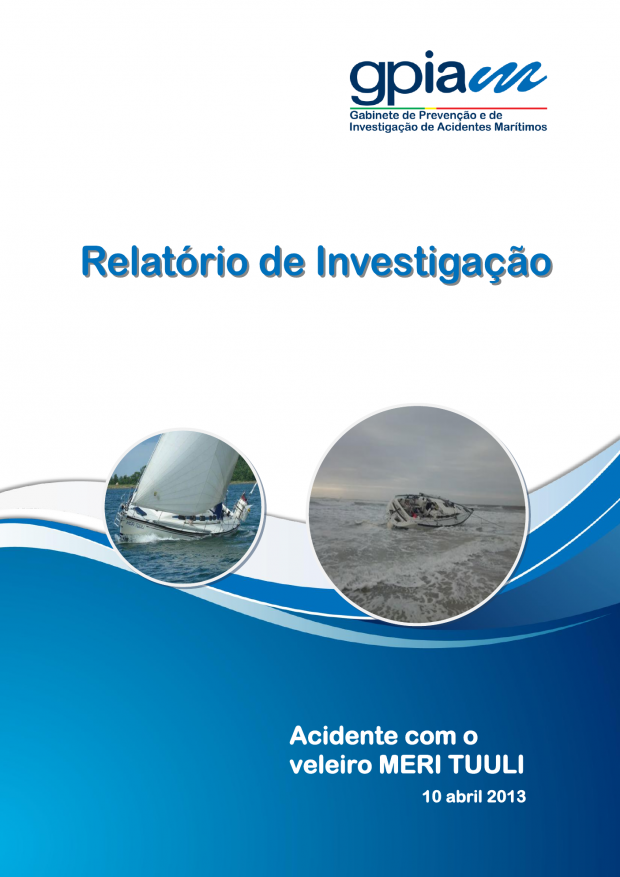
MERI TUULI - Very Serious Maritime Casualty
Vessel: MERI TUULI
GAMA reference: 2013-002
Data da ocorrência acidental: 10-04-2013
Circulated on: 05-09-2013
Published on: 10-10-2013
Casualty Event: Foundering
Summary
On 10 April 2013, MERI TUULI departed Peniche with five persons aboard for a coastal voyage, with Leixões recorded as the intended destination. Despite worsening weather and sea conditions, the skipper subsequently decided to attempt entry into Figueira da Foz harbour, which was closed to vessels under 35 metres. The craft’s AIS and NAVTEX equipment were switched off. While MERI TUULI was close to the harbour entrance, a large wave caused the craft to pitch, heel violently and capsize, throwing four persons overboard and breaking the mast. The skipper returned aboard and launched a red parachute flare. The nearby sailing craft TIME BANDIT observed the flare and transmitted a Mayday relay. During the ensuing rescue operation, the Maritime Police boat PAPA NÓS was also capsized by a breaking wave. One MERI TUULI crew member and one Maritime Police officer died, while the remaining persons sustained injuries.
Safety recommendations
SR01-2013/002,
Assess developing rigorous and standardised checkout procedures for recreational craft departing non-concessioned marinas and recreational docks, including information on coastal hazards, expected weather and sea conditions, the status of nearby harbour entrances and emergency contacts. No response status is recorded in the report. Assess establishing rigorous check-in procedures for recreational craft entering Portuguese territory or beginning a new voyage, ensuring that verified information concerning the craft, crew and skipper’s qualifications is entered in the Latitude 32 system. No response status is recorded in the report. Assess equipping harbour master offices and local Maritime Police commands with full access to the Latitude 32 system and providing personnel with appropriate training in its use. No response status is recorded in the report. Assess installing the Latitude 32 system at all relevant Coastal Control Unit posts and establishing rigorous procedures for its use and for visits to recreational craft using Portuguese ports and marinas. No response status is recorded in the report. Assess recording all VHF channel 6 communications occurring within the geographical area covered by the maritime traffic control centre. No response status is recorded in the report.
Lessons learned
Before attempting to enter a harbour, the skipper should confirm the status of the harbour entrance directly with the competent authority and assess whether the prevailing and forecast conditions remain within the craft’s safe operating limits. A closed or restricted harbour entrance should not be attempted. AIS, NAVTEX, VHF and other available safety equipment should remain operational and be used effectively during coastal passages. Marina departure procedures should provide crews with verified information on weather, coastal hazards, harbour restrictions and emergency contacts. Lifejackets should be worn when navigating in severe conditions or approaching a hazardous harbour entrance.